Podcast
Firgun Ventures Podcast
What Matters In Quantum

Firgun Ventures
May 20, 2026
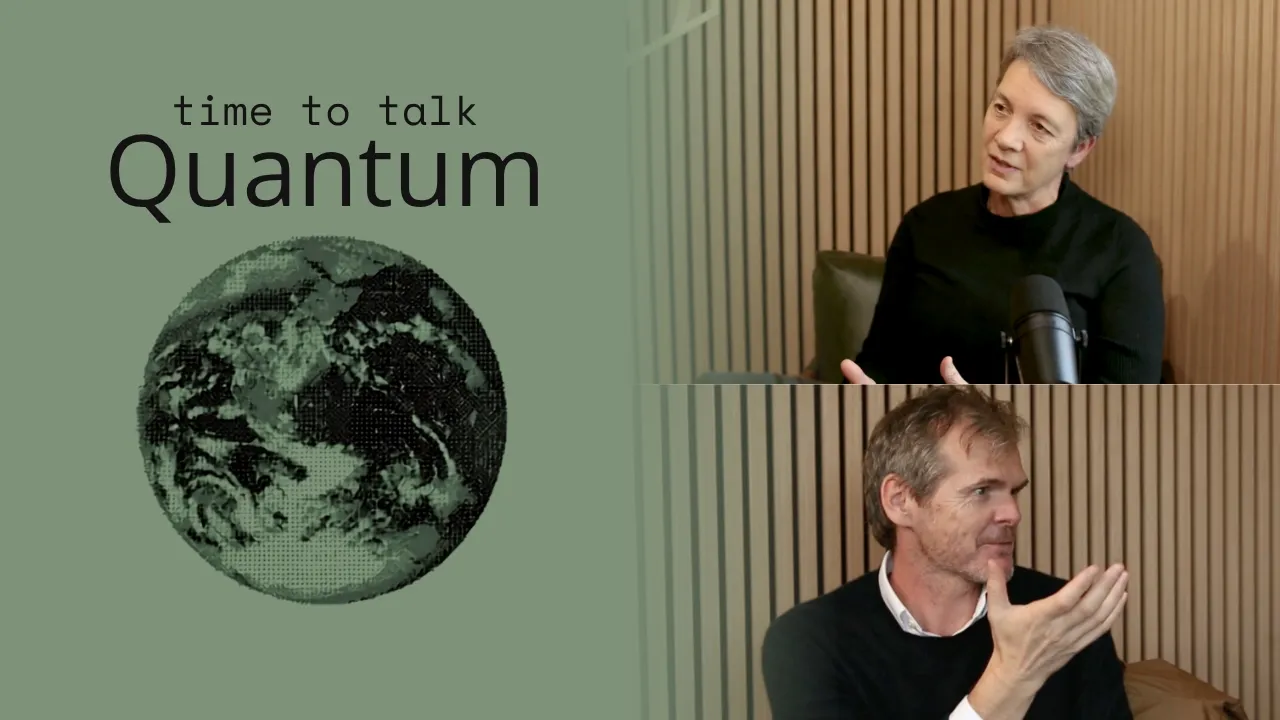
Michelle Simmons on Silicon Quantum Computing: Atomic Qubits, AI and Scaling Quantum Hardware
Transcript
[0:00] Hi, I'm Dr. Kris Naudts. I'm a psychiatrist and neuroscientist. I'm also the founder of Culture Trip and now co-founder of Firgun Ventures. I'm here today with Michelle Simmons, founder and CEO of Silicon Quantum Computing from Australia. Um Michelle, welcome to the show. — Hi Chris, lovely to meet you. — It's great to see you here at uh Founders Forum and to talk indeed about quantum. Can you tell us a bit more about yourself and and your journey? — Yeah, sure. So, it's good for me to be at the Founders Forum even though it's
[0:27] raining very heavily at the moment outside this little booth. Um but yeah, I'm originally from the UK. I would have spent um a long time in my early childhood looking at whether uh how to build things. I really like to build things and looking at physics and chemistry as a way to do that. I did a double degree at Durham and then spent seven years in the Cavendish University of Cambridge and really learned there how to make very high quality quantum devices. That would have been the genesis for me in moving into quantum computing. It was when experimentally the field just started to take off.
[0:55] — When was that? uh so in so I was there from 92 to 99 and I saw the first error correction experiments in 98 from Canada and wrote a flams group and I realized then that you know there was this whole new paradigm of computing opening up — at the time I was really looking where am I going to do this where am I going to do this work I was looking at the US uh looking at Stanford looking at Cambridge and then I was also looking at Australia and I guess one of the things that surprised a lot of people was for me I felt the best thing to do would be
[1:21] to go to Australia — this was at that time to further your academic career in the No, actually it was really to from the get-go um enter the field to try and build a quantum computer in silicon. And so I guess at the Cavendish I was looking at how people were manufacturing devices in the quantum regime and I had this realization that in university research everyone was looking at what's the thing that's going to come next after silicon. So what's the thing that's going to replace silicon for you know transistors of the future and the
[1:49] Cavendish was famous for looking at a material called gallium arsenide and looking at very fast high quality transistors and in particular looking for quantum effects in those systems. So it's very famous for looking at kind of Nobel Prize winning new states of matter. So I had a great training there for seven years in really making exquisitly pure and clean devices and then seeing how stable quantum effects were and it was a bit of a joke at the Cavendish at the time that quantum devices were never going to be
[2:14] reproducible. They were not stable and so I saw the error correction results come out and I thought okay if you're going to build a quantum computer you've really got to figure out what material you build it in and how you make it and the core has got to be high quality. So kind of excellent material for qubits but also that can scale and that was I guess the realization for me and no one was looking at silicon materials and part of the reason was it was believed it well it's an indirect band gap material so people thought it wouldn't
[2:41] be good for quantum — uh but also all the research that was being done in silicon was owned really by the semiconductor industry for classical computing — and so no one was looking at it at university research levels and so — there were also no quantum startups at that point in time — yeah this was this was very early days this was really just the very first idea that you could do error correction practically and so for me that was like a turning point until that point it had been a theoretical field um I'm very
[3:06] pragmatic and very uh device-based material scientist at heart um who likes to do quantum and so I realized gosh if we could do it in silicon that would be a really good platform to to grow — but importantly you'd have to do it at the level of individual atoms so it's very clear that the smaller your physical qubit the higher the quality of the system — and so I saw some papers that were published um by a guy called Bruce Kane at the time using atoms in silicon Um um there was a another paper using quantum
[3:33] dots with Loss and DiVincenzo — and I looked at both of those and thought ah you know quantum dots is what I've done at the cav edition and they're very hard to do. Yeah — there's lots of problems in getting them reproducible. You're doing a lot of materials engineering to try and artificially create an atom. — So why not just build an atom based system instead? — And so that was really why I moved to Australia. Australia was a country that was kind of ambitious. It allows leadership at a very early age. And I realized I if I I won this fellowship called a QE2 fellowship, but I also
[4:00] immediately went into setting up what's called now a center of excellence. It was called a special research center at the time. They were very receptive to your — they were they were you know kind of very um open to big projects that were you know kind of national projects and so when I moved there we literally in the first year we got more than 50 people together half of them working optics half of them working on silicon and we set up this idea we're going to build an atom based quantum computer and we actually came out and called it the
[4:25] center for quantum computing technology
[4:27] — I'm quite amazed by it because most quantum founders I I meet I would call them accidental founders as in They of course love what they do and they want to build the computer. Yeah. — Um but they're only in the startup world because they couldn't do it in the lab anymore. There's not enough resources. You seem to have been — predetermined to do this as a company and and to leave academia was clearly your path. — Yeah, I think so. So I think I you know I reflecting back on it I realized that
[4:54] um — everyone individually is limited by their own brain and that if you want to build something as complex as a — a full computer — um you need to have other people to work with. And so my experience with the Cavendish is there's many different people that manufacture and test chips. — And so you need quite a large team to build this whole thing. And so I realized you can either start with a small group and try and grow it which is honestly a slow painful way to do things or just go out ambitiously build a team
[5:19] straight out of the gate and then take on the technological challenges because certainly at the time that we started no one had built an atom based device in silicon and in fact we put out a a paper within a kind of a eight-stage plan and a lot of people kind of looked at it and said well that's great not each one of those stages hasn't been done yet so the chances of getting all the way through eight is going to be pretty low — that people think you were mad — I I think there was an element of that. I think there was an element whereas for
[5:44] me I you know we done a lot of research and looked at the papers that existed already and so for me I could see the path forwards — and it just hadn't been done. — Yeah. — So it wasn't a case of having to solve something that was impossible. It was a case of no one's tried it but there's enough evidence that I think it can be done. — So you're the soul found. — Yeah. — Also remarkable. Yeah. — Yeah. Yeah, — I think I think it's come because I've in um in Sydney I've been uh the
[6:09] director of the center of excellence for a long period of time over 15 years. — And so I've really loved building teams — and then just leveraging different knowledge to do something really complex. — And I guess in the the Australian system when we started it was an Australianbased team, but for me — leading something in one country is not good enough. You've got to lead the world. So, so when I became director, I literally said, "We're going to get the best people from over the world to work on this project." — Yeah. So, the company was founded when exactly?
[6:36] — So, the company was founded in May 2017. It took me probably about two years to get the funding. So, I spent a lot of time before that launch. Yeah. — Um, and you know, one of the things I did I think was quite unique as well was not just the technology, but — getting governments, industry, and university to co-found a company. And so I recognized that in Australia these centers of excellence were like the pinnacle of the biggest research projects that had long funding. Um but
[7:01] there was very little to help you get across the gap to commercialization. — And so I watched you know I watched the Google story where John Martinez set up Google and I thought wow we've got to go now because we've got technology that's equivalent is you know the same kind of stage. — Um if we don't go now lots of companies going to start up and everything that we've done to date will slowly be taken over. M — and so I literally went to the government I said we've got world leading technology hundreds of patents um we've demonstrated that we've got
[7:28] incredibly high quality cubis and we've got the team to scale. Yeah. — And so I persuaded um the university government and two industries in Australia Commonwealth Bank which is one of the big four banks in Australia and Telstra which is the big communications company uh to get behind it and co-und it. And at the time again that was quite unusual. It's it was not easy to do that I'll be honest. No, it's remarkable. — But um but then we launched in mid 2017. I think a lot of people are really
[7:54] surprised. Out of the blue there's this, you know, $83 million investment in a quantum computing company in Sydney. So it's quite you know it's quite interesting to see the global reaction. — Yes. Yes. Of course. Of course. We're going to come back to Australia as well
[8:05] later later in the conversation. From a technical perspective though, you of course already um spoke about it a bit. Um people who are listening to the show, I mean they will know that there are various ways in which a quantum computer can be built. I mean yours is one way. Um there's others there's trapping ions, there's photonics, there's there's maybe what five main modalities or so. — Could you talk a bit to that what what these modalities are in essence and why your modality would be the winning modality or or is it even about winning?
[8:32] Do they all progress? — Uh so look, I think for me it was very important like I said at the beginning to choose a system that was high quality and that would scale. — And so I I looked around and I saw things like iron traps. cold atoms didn't exist at that time way back in 200 but in trap systems are very small uh qubits that were trapped in a vacuum with a laser and I thought wow they give really high quality because they're small so if you can build things small — and then I guess the reality is that we're not using a vacuum for the the host we're using a silicon lattice
[8:59] — and if you get very pure silicon and ice on your purifier it essentially becomes a vacuum yeah — and so you've got a way now of building an equivalent but in the solid state and I guess my background is solid state is something that I understood well and so for me that seemed like a practical way to go. I'm not an expert in trap, so I don't know the challenges they have, but but I know that in certainly in my vision of where we're going, — the challenges we have I could see would be smaller. — Yeah. — So, it has been demonstrated at scale in silicon. So, it's just another form of
[9:26] lithography at a in an enhanced level of accuracy. — Yeah. — Um obviously superconducting were very dominant at that time. Superconducting qubits, big systems. Um you know, they they again the market leaders in terms of qubit count. um they demonstrated — big tech has bet on superconductor — big tech big tech has bet on them but again I for me I saw at the time that they're systems that have short T1 times and so for me I realized you've got to have something that lasts a long time and has very fast gate operations and
[9:52] superconducting has very fast gate operations which is fantastic — but they have short T1 times so if you can get a system that's the same but longer T1 that that would seem a good thing to do — and so I guess in there's others now that futonic systems part of our center of excellence was photonics so I got to see that close up and personal — and when I saw the different ways they're doing either continuous variable or single photon and again I saw for me I saw the challenges not being trained in those fields I just thought wow all these challenges so for me the
[10:18] challenges and ours seem smaller but it really kind of combined the small physical systems um with the speed of superconducting yeah but in silicon and so for me it just it felt that that was the right way to go
[10:28] — okay and if you now look back on these nine years I mean has it has it been as you expected it were a big surprise on the technical front in particular — yeah no so I think we because we started the research back in 2000. We basically figured out the first 10 years how to manufacture with atomic precision. We got single atom devices in 2012. — We saw then that the coherence times are very long. T1 times are incredibly long. — Um so we already knew the qubits were good and I guess along the way for me
[10:54] — no surprises it's like a real technology challenge all the way through. It's like you know you have a vision of where you need to go. You've got the technologies that exist. You've got to put them together and make sure that it works and then demonstrate that it is what you theoretically predicted at the beginning. And so no real surprises although I would say it gets better and better. So you know I didn't I didn't anticipate um that when we made wires of phosphorus dope silicon that they would be able to conduct as if they were
[11:19] copper. Okay. — Um I didn't expect we'd get gigahertz frequencies down to atoms that were less than a nanometer apart and individually be able to address them and run them with very high quality at the same time. — So there were things that I thought would be actually harder. — Yes. — And so I've been kind of delighted that it's been easier having having done it. Yeah. — And then yeah, I guess throughout the whole journey, I originally thought that I was just going to make the QPU, the quantum chip, and we've ended up building the FPGA controllers, the embedded software.
[11:46] — You know, we already had strong error correction teams in Australia and people that worked on architecture, so I knew that they would come in. — But yeah, it's it's definitely become bigger than I originally envisioned. — And I guess now what's interesting for me is I kind of have the whole blueprint in my head. — Whereas at the beginning, I had lots of plans. — Yeah. — And now those plans are blueprints. So it's a very it's a very exciting and rewarding become a road map not only a vision. — Yeah. — Yeah. It's been it's been like something you can map out.
[12:11] — So it's Yeah.
[12:12] — Yeah. Very good. And and how many people are you today? — So probably 130. So we keep growing. So — these are all in Australia today or — Yeah. most of them are Australia. So probably got about 5 10 people outside of Australia. So — where are they? Why are they outside? — Yeah. In the US. So we're expanding into the US. Okay. — Our chair is in the US. We've got a lot of our executive team in the US. Our business development team in the US. We've got people in the UK that we've been hiring with the ARM design chips. Um, so that's been great. And then people in New Zealand. So New Zealand is one of those little hubs that has great
[12:40] education. Okay. — Um, and yeah, a lot of engineers that we hired that like to live at home. — Okay. All right. Okay. What a lot of people also ask you, me, everybody in the community is revenue customers. I mean, you have them? — Yeah. — Yeah. Who are they? — Yeah. So, we've got at the moment we've got five customers. Um, they they include uh Commonwalth Bank and Telstra. So two of our original shareholders, they kind of like — they came in right at the beginning. So I probably should tell that story. So
[13:07] 2012 when we made our first single transistor, I got a a phone call from the CEO of Commonwealth Bank in Australia and he a guy called Michael Hart and he said, "Can I come and visit you? I'd like to talk about your quantum computer." And I remember at the time thinking, "Okay, — yeah, sure." — And so he he came into the building. He's a very larger than life character. Um and he basically said, "Look, you know, we the bank has always been at the forefront of computing. We did cloud computing first. uh we we've heard of quantum, we've been traveling all over the world, everyone tells us we should
[13:34] come work with you. And so we set up a collaboration back in 2013. — Wow. — For four years. And it was really milestone driven. — Yeah. — Um he I think he was genuinely impressed. Our our kind of training had been working with US Army Research Office. So we've been funded since 99. So 26 continuous years. It's a very milestone driven program. You go every year, you say what you're going to do. You go the next year and you have to show whether you did it or not. — And a lot of people have come in and out that program, but we've we've stuck for 26 years. they're now almost like friends.
[14:01] — Um, but that rigor meant that when we wor with Commonwealth Bank, we were delivering the milestones that we said we would on a time frame that he was genuinely impressed by. And so they then invested in the company. So they become one of the original foundational shareholders. And all the way through, they wanted to be the first to access the technology. — And so when we started making chips in the AI space, we we you know told them, we've got this chip, we think it's going to be able to enhance AI. Um, we've got results internally that look great. And they were like, let's try it. So both
[14:27] combank and Telstra came in straight away. Um they wanted to make sure that they got the the leverage of being the first in. — But then since then we've had Australian Defense, we've had Schneider Electric, we've got High Frequency Trading Company that's come in. — Um and I think you know — so they come to you or you go find them or — Yeah. No, they're coming word of mouth. So that's what's interesting. So the existing uh people that use the system talk to others. Um we had a release back in October last year where Telstra showed that we could reduce the training time
[14:55] for deep learning models using our chip from 3 weeks to two days. Um that word of mouth got out and now we've got literally tens of customers trying to get in. So 32 customers sitting wanting to get access to the system. — Um we did not anticipate such a demand so quickly — and you handled it. — Um so yeah, so at the moment we're we're looking at we've increased the product team. Uh we've increased the amount of manufacturing. You'll see there's some announcements in the last few days about us getting more money from the
[15:20] Australian government to increase the volume of manufacturing. Um but yeah, so it's really an exciting time for us because each customer has found something that is of value to them. Yeah. — And they're talking to others and that's bringing the customers to us.
[15:32] — What's also mysterious to most people I've noticed is who works for a quantum company like these 130 people. If you if you break that down a bit in in in disciplines, what is that? — Yeah. Oh, it's mainly engineers. So probably 80% of engineers. — 80%. Yeah. Yeah, they're really from manufacturing. So I think one of the current really probably one one of the most unique things is one of I think we're the only private company and one of the few companies globally to manufacture their own chips.
[15:57] — Yeah. Okay. — So we have a huge amount of u people working in the manufacturing side. So it's basically people in clean rooms, people using scanning probe systems to do lithography and crystal growth. So we really — What kind of engineers are those? Electrical engineers or — Well, they're a mixture of materials engineers, electrical engineers, some chemists, — um high frequency engineers. Got a lot of those. So we actually build our control systems. So we use FPGA controllers and we again that was a great story when we first started the company. We were buying off the shelf
[16:23] electronics. Um we've got a lot of RF engineers in Australia who work in companies like Coccia and ResMed and um involved in Wi-Fi and they we basically put out some calls. You know we're trying to design our own systems to do high frequency control and the gigahertz regime. We had a huge influx in Australia of people interested — and they came in and they looked at the way we were running these off-the-shelf electronics and they're like oh we can redesign that to be so much better — and within you know 18 months they had redesigned something that was fit for
[16:50] purpose you know some of the upload times for wave functions were hours they dropped it down to milliseconds you know and it just meant that the the development of the system got faster — so 80% engineers and the other 20% is what — uh so quantum physicists so the quantum physicist and engineers are now almost the same thing they're coming through engineering departments. — Um so yeah, so theoreticians in the quantum space and then you know corporate team — so product product team they're relatively small but they're growing.
[17:16] — Yeah. — They're growing. So yeah so we've you know we've got all range of finance people, legal people, IP uh product teams. Uh now we're building a manufacturing plant in Australia. So we're now growing out that side of the business. So getting people that have built manufacturing plants in uh those that run them. It's a it's a new new world. But in order to scale, you obviously will need more sales people and more commercial people, more corporate people. Do you also need a multiple of of engineers or not quite?
[17:42] Is that sort of roughly the size that your engineering team will be? If you become a thousand people, yeah, will that then be indeed still 100 engineers and just 900 more commercial functions or do you get to 500 engineers? — This is interesting. So I think the sales people you you don't want to have too many sales people. So word of mouth is working incredibly well for us. — Yeah. Um and so um customer validation and talking to other customers tends to bring the right kind of customers to us naturally. So yeah, whereas I think one
[18:09] of the things I have seen is a lot of companies go out and try and sell things when they're not quite ready. And that's that's just that's very a very painful way to live. Whereas we've we've kind of really from the beginning decided we'll get products that have value. — So demonstrate it internally, — demo it with a customer and then start working with them. — Yeah. — And that's you know that's that seems to just word of mouth. Yeah, — work very well. — Yeah, very interesting. But can you word of mouth 10x the staff? Is that
[18:35] possible? — Ah, so I think the staff is Yeah. So we've been growing the company I would say organically since the beginning. — It's been a relatively slow growth. We've watched and that's deliberate. So we've watched companies hiring and firing teams and I guess for us — in quantum — yeah in quantum I think I think for us it's it's critical that the culture of the company is maintained. So we've got — because we've got all these different we've got nine different specialtities from manufacturing all the way through to you know working with customers. It's
[19:01] very critical and so everyone in the company can see the processes come through — and and again just to give a sense of that our manufacturing um time frame is a oneweek turnaround — and so we can literally design build and test a chip in a week and that's much smaller than typical foundry basically is 16 to 40 weeks. — Yeah. And so that means everyone gets to see the chips coming through constantly and we've got multiple manufacturing systems. — That's rewarding and incentivizing. — Yeah. And so when people, you know, literally on one floor, we we all sit on
[19:28] one floor of a building, you can — see the customer having a chat with the product team and you can see the person making the chip and the designers and the architects talking about, okay, we move it this way, this will be better. So it's a very it's a very energized, fast-paced environment. — Yeah. — And I think one of the key things going back to culture is the Australian culture is very egalitarian. So everybody's equal and we have this kind of motto in the company every atom counts. Everyone's equal and that means that we have huge numbers of people trying to get into the company.
[19:54] — Interesting. Qualified people. Yeah. — Yeah. So we literally have like teams every team has got its list of people that try and get in. — Quite remarkable. — Constantly looking for you know people that are high quality, hardworking, enthusiastic. H — yeah it's very interesting because also what we don't see yet in quantum um which is all over the place in in AI of course is indeed insane salaries and wage demands because people are in such high demand. Of course in quantum we
[20:21] don't see that yet salaries seem to be modest or commentary to skills or experience. — Yeah I mean I think a lot of the people that we work with are motivated by the promise and the reality of seeing it happen. Yeah. So they see almost ideological as well. I feel — Yeah. It's I think they realize it's something that's unique and new. — Yes. Yes.
[20:40] — So there's there's you know they they believe in it. — Yes. Exactly. Can we maybe briefly go back to to that as well to the to the qubit count because again something that people ask like how many qubits I mean what is that road map? I mean can you speak a bit to that? — Yeah. So so I guess so at the moment we we've got an aggressive road map for scaling. um throughout that whole process because we manufacture chips a lot of people have queried yeah can you yeah can you be better than a foundry and so we manufacturing is our core and so we've realized that uh we've
[21:07] demonstrated essentially 10 different generations of tools to do the manufacturing and we've been able to demonstrate this fast time that is reproducible and so that allows us now to make uh qubit registers up to half a million on a chip that is tiny — and so and doing half a million has allowed us to develop these um analog simul devices both for we call it quantum twins for simulating systems but then also in the AI space — and so we know that the technology for manufacturer is sitting at that level
[21:34] already on one chip so then the for the error corrective versions of our processes you have to have individual control and so there you need a lot more control on each individual qubit and so the kind of qubit count we're sitting at is around about 30 this year going to a couple hundred then going to thousands in the next few years — physical qubits — yeah physical qubits yeah and and what's the ratio for logical qubits — so it all depends on the algorithm you So, so I think one of the things that's really good about our system is we have these exquisitly high quality qubits.
[22:01] — Um, so we're part of this kind of DARPA stage B at the moment, the QBI program. And that's the thing they've really identified. So with just a four qubit system, we can go beyond break even performance. So the T1 times are so long, we don't have to correct for those errors. — And so that's something I think they're very excited about. So we need far fewer qubits to scale. — Um, but yeah, depending on which algorithm you run, — obviously the longer the algorithm, the more qubits you need. It's hard to answer ratio physical because it changes depending on the algorithm.
[22:29] — Sure. Sure. Understood. And also to briefly go back to indeed uh culture
[22:33] and and and and work force. I mean what is the culture in in in a quantum company is is is also like 996 as they call it like 9 to9 every day six days a week is extremely hard work. Is it's like what would that be like? — Well so I so I think for us we we have uh different products. We have three different products and those products have obviously customers. um in two of the products and then that kind of very aggressive research roadmap — and so because we have these different teams the most important thing is the
[23:00] teams working in unison. So they will pass chips to each other and as soon as it's done they'll bring another chip through and so typically what we find is they race. So each team because it's only a week, you know, the team that gets it to the next stage will race it to get it to the next stage and that builds an inherent culture of speed which I love and I think it's critical for practical realization of the field. But — within that people can't maintain full commitment at all times, you know, and so we've worked in uh kind of ships. We have little groups that work together.
[23:27] They go on sprint runs and then they pass off the chip and they go on sprint runs and they pass off the chip. So there's a sense of, — you know, everyone gets to see how it behaves. — Yeah. How many direct reports do you have? Uh it's a good question. So we the as the company grows, we're constantly transitioning. So I have eight technical leads and I have eight um kind of corporate leads in the corporate team. Okay. — But that's changing. So yeah, as as we scale those numbers will ironically
[23:52] reduce. — It's interesting. The reason I'm asking is I mean when I have my own startup of course I had my own direct reports and typically you're advised to go like 8 to 12 but not not more. — Now I read this book um just last few weeks on Nvidia. — Yeah. And I was astounded uh to hear how many reports Jensen Huang has. Have a guess. — Yeah. I don't know. — 55. — 55. So I — So I when I started the company, I did do that.
[24:17] — Really? — Yeah. For a period of time, I did that because you know at the very beginning of the company there were so many different levels of expertise — that they're all slightly different and they've all got to communicate. So you need to build that momentum of them working together — and so many ways to drive that. Yeah. So at the beginning I I was doing that. Um and it was a very exciting period but then I realized as you go to 100 people you can't you you clearly can't scale since once we went past 50 we built built structures now we've gone past 100 we got a new structure
[24:44] — and so that's quite you know exciting part of the company as well it's never static it's — no it develops and that's why the Nvidia I recommend reading it actually it's indeed the history of Nvidia and it talks also a bit about the character that is Yansen but the things that stood out on on on the character on on the culture I would say or on the company Aside from the technical aspects, it's been around for a long time. — It had a very difficult start and it is of course what it is today. And then the
[25:11] character that is the CEO Jensen Huang, there's a there's a very strong dissonance between the public persona that we all see and then the internal persona which which is a rather temperamental mercurial character which was very surprising to me. You would not think if you see him on stage that it's quite like that. — Um that's one. Two, the 55 direct reports astounded me. — Yeah. And then the other oddity that he has, which is actually interesting, he so he has 30,000 employees or something like that. It's
[25:38] self crazy. — Every Friday, everybody in the company, so we're talking here about 20,000 30,000 people are supposed to email him with their priorities. — All right. — So he gets 20,000 emails and then he samples them for the next 10 hours, but of course you can't read them all. He samples and he answers in like two or three word sentences, but it gives him a sense every week as to where people think the priorities lie. It's actually interesting. — I think that's great. So I think like having um having visibility on the floor
[26:03] is absolutely critical. — And so I I love uh just going down to the lounge polling them on a regular basis where it's going. — Um you know it's very it's very important that they also feel empowered to give their views — and to raise things when they think you know I could do this better or this is going too slow or that's not happening. — And so that's you know it's absolutely critical to be able to have that that communication up and down. — But I thought that was brilliant. I mean as as a strategy I mean because yeah as
[26:29] you scale your company you have to scale your personality. — Yeah. — And and that's challenging. — So that's well so I think I'm very fortunate in that um the chair of our company is a guy called Simon Seagars who is the exco of ARM computing. — Uh he was the 16th employee at Arm took it to the US and made it into a very successful company. — Um but he is a genuinely wonderful person. Like he's just everybody loves him. everywhere I go. Um, people have, you know, that have worked with him
[26:54] speaking very highly of him. But he's, you know, he's got a very gentle way of coaching me and encouraging me to steer to grow in the way that I need to. And it's, you know, he's been the chair for two and a half years. It's it's fabulous. It's great to have someone alongside me who has been there, has done it. — Yes. Yes. So, — you have a coach as well on top of that or — Yeah. Well, he's I mean, he's, you know, I spend Yeah. Every day I talk to him. Okay. — Sometimes hours um really about the business, what we're doing. we got to
[27:20] get. So, he's he's a very active chair. — Um, but also, yeah, he's got that just that really good leadership style. — This is what good looks like. And he doesn't he doesn't ram it down my throat. I just absorb it.
[27:33] — Yeah. Okay. Yeah. Excellent. Um, so funding is of course a part of the journey. Always is. Fundraising. How has that been over the past 10 years? — Yeah. It's it's for me it's been fascinating because obviously getting that initial raise was um very important for the company. It allowed us to build out the team and it honestly provided us a buffer. — What was that initial race in terms of size for example? — Uh so it was 88$ 83 million Australian dollars. — What is that in GBP or US dollars roughly?
[27:59] — I don't know it probably about 60 US 50 60 US. — Um so and so that was that was fabulous. It meant that we had uh people in the company the sh the foundational shareholders were invested in the long run. Yeah. — Um and so they've kept us going for a long period of time, but obviously now, you know, we've got to the point where we've demonstrated a lot of the technical milestones and we're ready with customers. So we're starting to bring in revenue, but we're ready to scale. So building a manufacturing
[28:24] plant. Um it's nowhere near the size of what you would need for a full scale silicon foundry. So it's much cheaper. It's a few hundred thousand Australian dollars, but that is something we're building. So we're now capital raising. And the exciting thing about that is people have recognized, you know, the kind of world has changed. The software's — had its day. People now recognize that hardware is critical for the next generation of compute and they've they've locked on to the fact that we're not just a quantum computing company but a semiconductor manufacturer. Yeah.
[28:49] — And for that reason we're getting a huge interest. — So it's a very exciting time for us right now to be growing and building out that manufacturing. — Yeah. We are we ourselves are privately foundational investors or founding investors in Quantinuum as you know. We're also investing now in SQC. Absolutely. Very — delighted. Likewise. — Yeah. We're very happy about that. Um, does the Quantinuum IPO of last week, for those listeners that don't know, Quantinuum is an ion trap company that
[29:14] went public at at a punchy valuation of 16 billion or thereabout at NASDAQ. — Um, does it help you for the fundraising? — I look, I think it does because people have recognized now, you know, there's there's been such a boon in AI and I think people have started to realize AI is phenomenal. We all use it. I mean we're all getting to crypto how fast is changing it's help quantum — but it's also got this you know huge power demand it's got a you know it in
[29:40] in itself is a form of parallel compute that — is just kind of brute force and quantum is more naturally — parallel for certain kind of tasks and so you know with our chip with the AI the watermelon chip that's shown that we can basically reduce the training times there is a way now to bring quantum in to help solve that kind of power issue for me — um and so that's where a lot of people are interested of data centers. They're recognizing they've got this massive build. Um, so that intersection between
[30:05] quantum and AI is very helpful and you know now seeing that companies are getting out there, people are recognizing that quantum is coming. I think it's fabulous. It's a it's a good time for the field. — Yeah. I agree. Um, you'll be fundraising for a while to come because — yeah, — quantum is is not cheap. It's not cheap to build a quantum computer. I mean, what would be next for you on on that level? I mean, would you would you envisage an IPO down the line? Would you would you back ever?
[30:30] — Yeah. Look, I I watch what's happening in the market. It's fascinating everywhere. Um, so it's a very dynamic time of change. — Um, right now we're fully focused on getting the funding for the manufacturing. So that's an immediate need. So there are lots of schemes in Australia that help with that. So just announced today was the National Reconstruction Fund. It's tripled its funding. — Um, so so that's our kind of immediate focus. Obviously we're in the DARPA want to go to DARPA stage pushing to go early on that.
[30:55] — Um, so yes, so the fundraising is always going to be a critical part of us and I think we're going to explore. We're gonna watch what happens in the field.
[31:02] Sure. — Keep our options open. But yeah, it's um it's fascinating to see the raises that are out there both public and private. So — yes, it brings a lot of it brings a lot of public attention to to — I think people have realized you know for a long time it's been the promise. — Yeah. — And now I know with us having revenue it's it's real. — Yeah. For sure. For sure. For sure. And look at the whole AI boom as Well, I mean when Nvidia was indeed starting with parallel computing and and and neural networks, these were two very discredited kind of disciplines
[31:29] academically and today it rules the world. So maybe quantum has its moment too. — Yeah. I think you know all company all kind of fields kind of go funny and then they they take off. So — always tends to be like that. It's true. — Um you mentioned DARPA. I mean could you comment a bit on that as well? What is DARPA to you? What is DARPA to quantum because it plays an important role. — Yeah. So I think it's been interesting. Like I said we've had funding from US Army for a long time. DARPA is like the next level up in terms of DARPA gets
[31:54] involved when they see that it's coming close to realization and they're like a full integration team. — Um and so it's been fascinating working — very involved. — Oh yeah, we've been working with them for at least over a year now. — Um and they they literally sent a team of you 20 20 plus people to Australia um right across the every level of the stack. So it's like having another a a group that's working alongside you that's questioning you on everything
[32:19] which you know you can't you can't buy that for a company to have people questioning every single thing you've done it's fantastic — it doesn't hinder — it doesn't know it's the opposite because it makes you constantly you know you have to reassess and think okay no and I think the surprising thing is we've doubled down on everything that we believed in so that's been great but it's also just given us a different way to look at the world um it's good it's just it's a very — how do I How do I interpret that? They're not a shareholder.
[32:44] — No, — they are they are like they're like they're like a board on the work floor or so independent experts uh that are assessing the technology but they're investing. So, so they're, you know, they're time and money. So, you're getting funding to do the project. — Um, and then at the end, if it all goes well, they're essentially going to buy the first system. — Yeah. Okay. And so so it's like um everything we've done with the US has
[33:09] been a way of — benchmarking pushing — and you know keeping it real. — You see it as a quality label. — Oh I think well it's I yeah like say you can't you can't buy that. So — the worst thing in the world is to be living in a bubble you don't really know what's happening. So having people you know challenge you constantly it's the in some ways it's the core of being a quantum physicist — but it's also the core of having a company. Yeah. So having people test as you go along the way is great. And then having customers at the end.
[33:36] — Yeah. — And they do it — so intensely. Why? — Oh, just because they're experts like like any everything we've had with us is there. They take trained experts from different fields and those people want to check. Does that make sense to me? Do I agree with that? Well, this is what I know. That's different to what I know. Let me let me argue it out with you. — And yeah.
[33:57] — Okay. In general, of course, I mean, um, quantum is dual use technology as we know. I mean, how are you thinking about that and how does it manifest itself in in your day-to-day aside from DARPA? — Yeah. Well, so so part of the reason obviously of getting the Australian government as a shareholder was because I know that this technology is going to be transformational. — Um, it's going to be, you know, manufacturing chips. It's going to change the way we do computing. I think it's very important that, you know,
[34:22] wherever you live, the governments you're involved with are aware of that change um and can get behind the the rapid speed of progress. M — so having them as a shareholders has been great. I think um yeah I think I now see lots of countries starting to get governments involved. For me it was critical because it's joyous — um and wanted them to be fully aware that I wasn't off doing something that you know suddenly they find out about how did that happen under our watch of course of course — but it wasn't your primary motivation or goal to to be on the dual use side of
[34:51] things. It just happens to have that. — Uh so I think any new technology that's transformational is likely to have that behind it. And I think, you know, there's for me — as someone that's, you know, worked in a field for a long time, you know, in in any country, you're getting essentially taxpayer money to fund the research that they're doing. — And so I've always felt a tremendous sense of responsibility that I owe it to the people that have funded it and to the government or the organizations that we work with. So — yeah, it's a very interesting because culturally in Silicon Valley, that's
[35:19] also how it all started, but that has gotten quite far away from that. The medality has gotten far away from that. I mean now like Google famously with the maven project they didn't want to participate in that because it feels the government is listening in or and they didn't want that the employees strongly rejected it. Alex Karp of Palantir actually published this book recently called the technological republic right — which I recommend reading and he talks about that a sense of responsibility of tech and the brightest minds in the world towards the countries in which
[35:45] they operate and and and that's not a mainstream view yet though in tech I would say — yeah interesting — but it is I I recommend the book and he's um he's a philosopher by by training so it's also very clearly uh written to agree with it but it's it's interesting and it's thought-provoking and he asks — well he forces you also to think a bit more about what are we building? What are we building it for? Yeah. — Like do our should it be so that our brightest minds globally build dating
[36:11] apps, — photosharing apps, is that is that where all that brain power should go? Does it really really not need to do anything more than what the market asks? — Yeah. — Um and yeah, the answer is obviously come to you as well as yeah, no, that's probably not quite right. — Yeah. Um and and quantum is very very interesting in that regard indeed because it uh it sits right at at the heart of of those discussions. Um
12. What should the world’s brightest minds build?
[36:34] geopolitics is also obviously a part of of quantum um like defense in general. I mean you have um quite a big neighbor a little bit up north called China. Um how present is that in your day-to-day? How present is China and Australia today? Uh, so Australia obviously is physically closer uh to to Asia and so we we probably have a slightly different view of the world because we get to see things uh — up close and personal. Yeah. So we I think the the university that we're at
[37:01] has a lot of Asian students. So a lot of students come to Australia to get trained. — Um I think we because we have such a strong — collaboration with the US across pretty much everything we do um in in the research space and our customers and um in terms of people going back and forth and and in Europe too. Uh so we feel very connected. — So Australians in general — move around a lot. You know they're constantly traveling. They're constantly connected. And I you know I reflect on it because quite often when I do go to
[37:28] different countries particularly in the US they don't tend to travel a lot outside the US. Whereas we're constantly traveling everywhere. And so we we probably — in terms of passport holders versus number of Australians is probably not dissimilar. Passport holders in the US who travel versus total number of Australians is probably similar. Even the population and the whole is much larger. — Yeah. — But yeah. So, so I think we have kind of a more — international view and so part of the part of the company's philosophy is we hire the best from wherever they are.
[37:54] — Um, that said, obviously there's countries where, you know, working on different technologies, we we don't go there. Anyone that's at war basically, we don't go there. — Of course. Of course. Of course. No, understood. Um, with the few minutes we have left, obviously you're an immigrate uh into Australia. You even have Belgian roots. Yeah. — Um what lessons does Australia hold when it comes to quantum and what did it what did they do right? What are they doing right? What advice could you give from
[38:19] that place to other countries who are embarking on this quantum journey? — Yeah look I think so one of the things I've really enjoyed about Australia is it's egalitarian. It really is quite ambitious. So the fact that it creates these research fellowships the UK has this as well research fellowships for five years. I've actually been on a research fellowship for my whole uh kind of career and that's meant that I'm uh research focused. Um but then we have
13. Geopolitics, Australia & China
[38:41] these ability to build big teams — and it's very the Australian culture is very collaborative. Uh to the point where I think most people when they see Australians overseas kind of like them. They're fun to work with. — Um but they're — you notice them. — Yeah. You notice them but they're also you know unbelie underneath the door. They're highly competitive. That's not well understood. So in the sports arena you see it on full flow and they're accelerated in general. They they they don't like to display that but it's underneath. So they've got this kind of
[39:08] like gritty competitiveness but with this great you know kind of fun they don't take themselves too seriously. So the culture in Australia is fantastic and like I said this ability to build teams where everyone everyone matters. That's the thing I've really enjoyed about Australia and with with the centers of excellence now we've been training people for 25 years. — Yeah. And the economy is booming as well. Of course, the — economy's booming. It's a good place to live. Yeah. So, it's so it's doing
[39:33] pretty well. — We're all sold. — Okay. Thank you so much, Michelle. I really enjoyed the conversation. — Likewise. Happy to talk to you.
EPISODE ENDS